

How to Care for Organic Linen Bedding
Table of Contents
- Why Organic Linen Bedding Requires Different Care
- How to Wash Linen Sheets Without Damaging the Fibers
- How Often to Wash Linen Sheets
- How to Dry Linen Bedding to Preserve Softness
- How to Prevent Linen from Shrinking
- Stain Removal and Troubleshooting Common Issues
- Storage and Long-Term Care for Organic Linen
- Frequently Asked Questions
Last Updated: October 18, 2026
Why Organic Linen Bedding Requires Different Care
Organic linen bedding demands a gentler approach than conventional sheets. The flax fibers are strong but delicate in ways that matter for longevity.
The difference comes down to fiber structure. Organic linen uses natural flax fibers without synthetic chemicals or heavy processing, so it responds differently to heat, friction, and harsh detergents than mass-produced alternatives. What works for cotton won't necessarily work here.
How you wash linen sheets determines whether they stay soft or turn stiff. The care label isn't just a suggestion, it's a roadmap, since organic linen often carries specific instructions based on its production methods.
Improper washing can cause shrinkage, fading, and stiffness. With the right approach, organic linen becomes softer with every wash. Here's exactly how to care for organic linen bedding so it stays luxurious.
How to Wash Linen Sheets Without Damaging the Fibers
Washing linen sheets correctly is the foundation of good care. Beyond temperature, water hardness, detergent dose, and drum loading all affect how clean your sheets get and how much residue they retain. Get these right, and your sheets will improve over time.
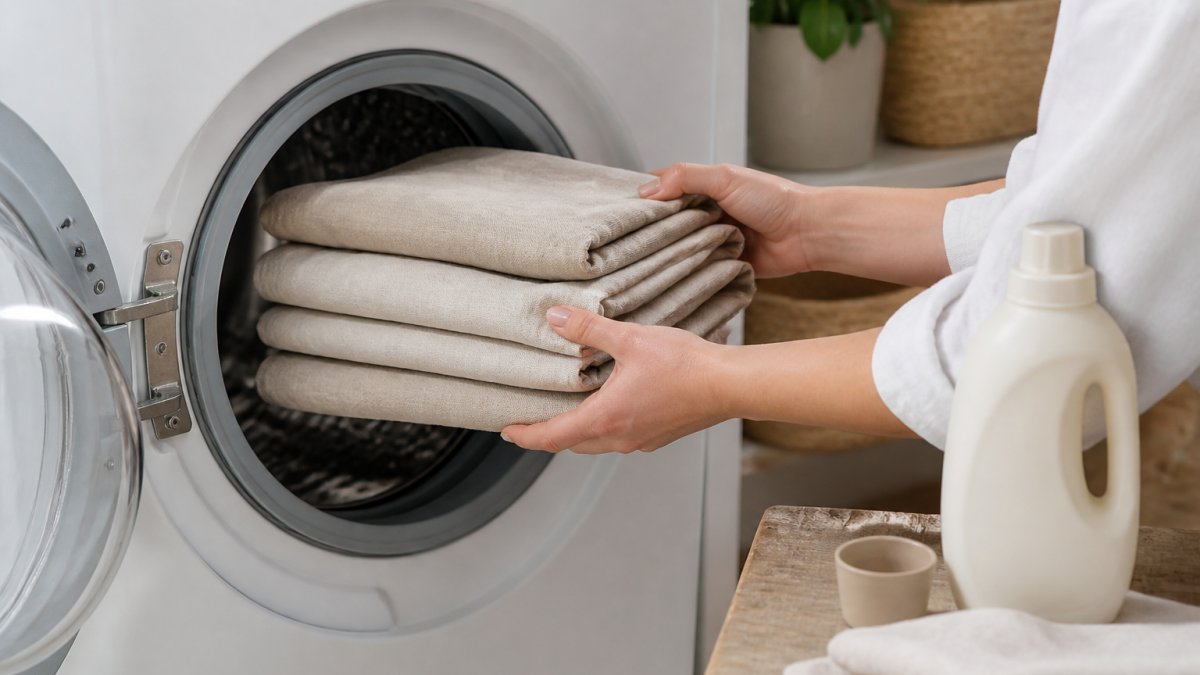
Water Temperature and Cycle Selection
Cool water is your friend when washing linen sheets. Most experts recommend using cold water or water no warmer than 30°C for organic linen. Hot water can weaken the flax fibers and cause unwanted shrinkage.
The cycle matters as much as temperature. Use a gentle or delicate cycle to reduce friction and stress on the fibers.
Aggressive washing damages organic linen faster than anything else: fibers get stressed, break down, and the fabric loses softness. A gentle approach takes a few extra minutes but extends the life of your sheets by years.
Detergent and Chemical Choices
Mild detergent is essential. Skip the heavy-duty or enzyme-based detergents designed for tough stains. These are too harsh for organic linen.
Look for detergents labeled gentle, mild, or suitable for delicate fabrics. Plant-based or eco-friendly options align well with organic bedding. The detergent doesn't need to be expensive, just mild.
Avoid bleach completely, even oxygen-based, which can damage organic linen over time. Skip fabric softeners too; they coat the fibers and reduce linen's natural softness.
A simple rule: if the detergent is strong enough to strip dirt from heavily soiled work clothes, it's too strong for your sheets.
Water Hardness, Detergent Dosing, and Washer Loading
These three household variables are where most washing problems actually start, and they're easy to overlook.
Water hardness: Hard water (high in calcium and magnesium) reduces detergent effectiveness and leaves mineral residue that makes linen feel stiff.
Detergent dosing: More detergent does not mean cleaner sheets. Overdosing is a leading cause of stiffness and residue.
Washer loading: Linen needs room to move. An overloaded drum prevents proper rinsing and increases fiber-stressing friction. Load sheets loosely and keep them away from heavy items like denim or zippered towels.
Washing Separately vs. With Other Fabrics
Washing linen sheets separately is safest, especially when they're new, since it prevents friction with other fabrics and lets you control the wash environment.
If you must wash them with other items, choose only soft fabrics like cotton towels or other linen. Never wash sheets with heavy denim, zippers, or rough materials, the friction damages fibers.
Separating sheets for the first few washes, then gradually mixing them with other gentle items, gives you control while staying practical for busy households.
How Often to Wash Linen Sheets
Most people benefit from washing linen sheets every one to two weeks. Unlike cotton, linen doesn't absorb moisture the same way, so it stays fresher longer.
Washing more frequently is probably overdoing it. Excessive washing, even gentle washing, increases wear, since fibers experience friction with every cycle.
Personal preference matters: some prefer weekly, others two weeks. Find a rhythm that keeps sheets clean without excessive wear.
How to Dry Linen Bedding to Preserve Softness
Drying is where many people make critical mistakes. Your method determines whether sheets emerge soft or stiff.
Air Drying vs. Machine Drying
Air drying is the gold standard for organic linen. Hang sheets in a well-ventilated space with good airflow; direct sunlight or shade both work. The key is airflow and avoiding high heat.
Machine drying is faster but riskier. If you use a dryer, select the lowest heat setting and remove sheets promptly when the cycle ends; high heat damages fibers and causes shrinkage.
Air drying produces noticeably softer results. Linen dried on a line or rack maintains its texture better than machine-dried linen, so it's worth the extra effort if you have the space and time.
Managing Wrinkles During Drying
Linen wrinkles naturally, it's part of the fabric's character, not a flaw. Still, you can minimize wrinkling during drying.
Remove sheets from the washer promptly rather than leaving them wet. Lay them flat or hang them straight to dry. If using a dryer, take them out immediately when the cycle finishes and fold while slightly damp.
Ironing is fine if you enjoy it, use a warm (not hot) iron with steam, but it isn't necessary for everyday use. A light misting with water and air drying often eliminates wrinkles without any tools.
How to Prevent Linen from Shrinking
Shrinkage happens when linen is exposed to heat or high-friction washing. Prevention is far easier than dealing with sheets that have already shrunk.
The main culprits are hot water, high heat in the dryer, and aggressive washing cycles.
Some shrinkage (around 3-5%) is normal with organic linen, especially in the first few washes. This is the fabric settling into its final size. After that, proper care prevents further shrinkage.
If your sheets have shrunk, there's limited recovery. You can try gently stretching them while damp and laying them flat to dry, but significant shrinkage is usually permanent.
Stain Removal and Troubleshooting Common Issues
Accidents happen. Coffee spills, sweat stains, and other marks appear on bedding. The key is addressing them quickly and gently, with a method matched to the stain type. Organic linen's flax fibers are absorbent and can be damaged by harsh chemistry, so the wrong treatment can set a stain permanently or weaken the fabric.
Stain-Specific First Aid Before Laundering
Treat stains before they go into the wash. Blot, don't rub, rubbing pushes the stain deeper into the fiber and roughens the surface. Use a clean white cloth or paper towel and work from the outside of the stain inward to avoid spreading it.
- Coffee, tea, and wine: Blot immediately, then flush the area with cool water. For red wine, a common approach is to sprinkle salt or baking soda on the damp stain to draw out pigment, then rinse. Avoid hot water, which can set tannins.
- Sweat and body oils: These often yellow over time. A paste of mild detergent and cool water applied for 15-30 minutes, followed by a normal gentle wash, usually lifts them. For persistent yellowing on white linen, an oxygen-based bleach (not chlorine) can be used sparingly, but check the care label first, since some organic finishes are sensitive.
- Blood: Use only cold water. Hot water coagulates proteins and locks the stain in. Soak in cold water with a little mild detergent, then wash gently.
- Grease and lotions: Blot excess, then apply a small amount of mild dish soap or a dedicated gentle grease remover directly to the spot. Let it sit for 10-15 minutes before washing.
- Ink and markers: Blot with a cloth dampened with rubbing alcohol, testing on a hidden area first. Rinse thoroughly before washing.
Never use chlorine bleach or harsh chemical stain removers on organic linen. These break down flax fibers and can cause permanent discoloration or weakening. If a stain persists after one gentle treatment, repeat rather than escalating to stronger chemicals.
Fixing Shrinkage, Stiffness, Pilling, and Fading
Shrinkage: Some shrinkage (around 3-5%) is normal in the first few washes as the fabric settles. Beyond that, shrinkage usually comes from hot water or high dryer heat.
Stiffness: Often caused by hard water, too much detergent, or inadequate rinsing.
Pilling: More common on lower-quality or loosely woven linen. Remove pills with a fabric comb or a gentle lint shaver, working in one direction. Don't pull them off, which can distort the weave.
Fading: Sun exposure and frequent hot washing accelerate fading. Dry in shade when possible, wash in cool water, and avoid over-washing.
When to Stop and Check the Care Label
If a stain or damage issue doesn't respond to gentle treatment, stop before trying anything stronger. Organic linen from different makers can carry different finishes and dye processes, and the care label is the final authority. A treatment that works on one brand's stonewashed linen may damage another's. When in doubt, a professional cleaner experienced with natural fibers is the safer choice than an aggressive home remedy.
Storage and Long-Term Care for Organic Linen
How you store your linen sheets between uses affects their longevity. Proper storage prevents damage and keeps them fresh.
Store sheets in a cool, dry, well-ventilated space. Avoid plastic bags, which trap moisture and can lead to mildew or musty smells.
Keep sheets away from direct sunlight during storage. Prolonged sun exposure fades the fabric over time. A dark closet or linen closet is ideal.
Wash sheets before storing them for extended periods. Clean fabric stores better than soiled fabric.
For Tahorah Wellness LLC customers, our Pillowcase Set in 100% linen follows these same care principles.

Caring for organic linen bedding doesn't require special expertise, just a few key principles and consistent habits. Our 100% linen products are designed to improve with age when treated properly. Shop the Collection and experience the difference that proper care makes in how your bedding feels and performs night after night.
Frequently Asked Questions
Will 100% organic linen shrink in the wash?
Organic linen bedding can shrink by 3-5% if exposed to high temperatures or hot water. To prevent shrinkage, wash in cool water (30°C or below) using a gentle cycle. Pre-shrunk linen is less prone to significant shrinkage, but always check the care label. Air drying instead of machine drying further reduces shrinkage risk and extends the fabric lifespan of your sheets.
How do you keep linen bedding soft without fabric softener?
Fabric softener coats natural fibers and reduces breathability, so skip it. Instead, wash with mild detergent and ensure proper rinsing to remove soap residue. Air drying in airflow or light tumble drying on low heat maintains softness. Washing frequency matters too: linen actually softens naturally with each gentle wash over time. Consider adding a small amount of white vinegar to the rinse cycle to enhance softness.
How should you store organic linen bedding between seasons?
Store linen in a cool, dry, well-ventilated space away from direct sunlight to prevent fading. Use breathable cotton storage bags instead of plastic bags, which trap moisture and can cause mildew. Ensure bedding is completely dry before storing. Keep storage areas away from high temperatures and humidity. Proper storage protects the natural fibers and maintains the integrity of your organic linen sheets for years.
Can you put linen bedding in the dryer?
Yes, but use low heat only and remove promptly to minimize wrinkles. High temperatures damage flax fibers and accelerate fading. Air drying is gentler and extends bedding life, but a brief low-heat tumble can reduce stiffness if needed. Never use high heat or prolonged drying cycles on organic linen, as this causes unnecessary wear and shrinkage.
Related Posts

How to Soothe Sensitive Skin Naturally

Tallow Balm vs Commercial Face Cream: Which Suits Your Skin?

How to Prevent Wrinkles in Linen Clothing

Best Natural Remedies for Immune Health: A 2026 Guide

Tallow Skincare for Dry Skin: A Practical 2026 Guide
