

Tallow Skincare for Dry Skin: A Practical 2026 Guide
Table of Contents
- Why Tallow Skincare for Dry Skin Is Worth a Closer Look
- Beef Tallow for Dry Skin: How It Supports the Skin Barrier
- Tallow Skincare Ingredients: What to Look For and What to Avoid
- How to Use Tallow Balm on Face, Hands, Heels, and Elbows
- Tallow Skincare Risks: Irritation, Breakouts, and Patch-Testing
- How Tallow Compares With Established Moisturizers
- Choosing and Assessing a Tallow Moisturizer
- Conclusion
- Frequently Asked Questions
Last Updated: October 7, 2026
Why Tallow Skincare for Dry Skin Is Worth a Closer Look
Tallow skincare for dry skin has moved from farmhouse folk remedy to mainstream shelf.
Dry skin is one of the most common complaints dermatologists hear. Standard lotions often sit on the surface and fade within hours.
But first, here's what most guides get wrong: they treat tallow as a miracle cure. It isn't.
Beef tallow is rendered fat from cattle, most often grass-fed cattle. It's solid at room temperature and melts on contact with skin.
Beef Tallow for Dry Skin: How It Supports the Skin Barrier
Beef tallow for dry skin works mainly by sealing in moisture. The skin barrier is your outermost layer, a wall of fats and cells that keeps water in and irritants out. When that wall cracks, moisture escapes and skin feels tight, rough, and itchy.
Tallow is rich in fats that resemble the ones your barrier already uses. That similarity matters more than any single ingredient claim.
Bioavailability and Why Your Skin Recognizes Tallow
Bioavailability here means how readily your skin can absorb and use a substance. Tallow's fatty acid profile sits close to human sebum, the oil your skin makes on its own.
This is the core argument for tallow over many lab-made creams. Your skin recognizes the fat. It folds it into the barrier instead of sitting on top as a film.
That said, "recognizes" is not the same as "proven to repair." No large clinical trials confirm tallow rebuilds a damaged barrier.
Tallow Skincare Ingredients: What to Look For and What to Avoid
Tallow skincare ingredients should be short and readable. The key is finding a tallow skincare without added preservatives and chemical fillers, because those extras are what most often cause irritation and interfere with how readily your skin can absorb and use the fat.
Bioavailability is the reason this matters. Your skin barrier is built from fats that closely resemble tallow's fatty acid profile. When a product is mostly tallow with a few simple plant oils, your skin recognizes the fat and folds it into the barrier.
What a Clean Tallow Ingredient List Looks Like
Look for:
- Grass-fed beef tallow as the first ingredient
- Simple plant oils like rosehip, hazelnut, or sweet almond
- Butters such as mango, cocoa, or turmeric butter
- Gentle botanicals like calendula, chamomile, or helichrysum
- Vitamin E as a natural antioxidant
Avoid:
- Synthetic preservatives and parabens
- Added fragrance and dyes
- Mineral oil and petrolatum blends
- Long ingredient lists you can't pronounce
A clean balm often has fewer than a dozen ingredients. If the label reads like a chemistry set, keep looking.
How to Read a Tallow Label Like a Formulator
Ingredient lists are ordered by weight, so the first three to five ingredients tell you what the product actually is. If tallow appears after water, glycerin, or a long list of oils, you are paying for a diluted product with a tallow label.
Check these specific things before you buy:
- Sourcing claims: "Grass-fed" and "grass-finished" are not the same. Grass-finished means the animal ate grass its entire life. Look for both terms together, and prefer brands that name the farm or region.
- Preservative-free vs. naturally preserved: Truly preservative-free balms rely on vitamin E or rosemary extract to slow oxidation. These are antioxidants, not antimicrobial preservatives, so they do not protect against water contamination. That is why anhydrous (water-free) balms are the safest format for preservative-free tallow.
- Fragrance: "Natural fragrance" and "essential oil blend" are still fragrance. If your skin is reactive, choose unscented or single-botanical versions.
- Packaging: Dark glass or opaque airtight jars protect the fats from light and oxygen. Clear plastic tubs let the product oxidize faster.
- Storage: Keep tallow balm cool and dry, away from direct sun. A bathroom windowsill is the worst place for it.
Signs of Rancidity
Tallow is a fat, and fats go off. Rancid tallow smells sharp, waxy, or like old crayons. The texture may turn grainy or unusually yellow. If your balm smells different than it did when you opened it, stop using it. Rancid fats can irritate skin and defeat the purpose of a clean product.
How to Use Tallow Balm on Face, Hands, Heels, and Elbows
How to use tallow balm comes down to one rule: apply to slightly damp skin. Tallow seals moisture in, so it needs moisture to seal.
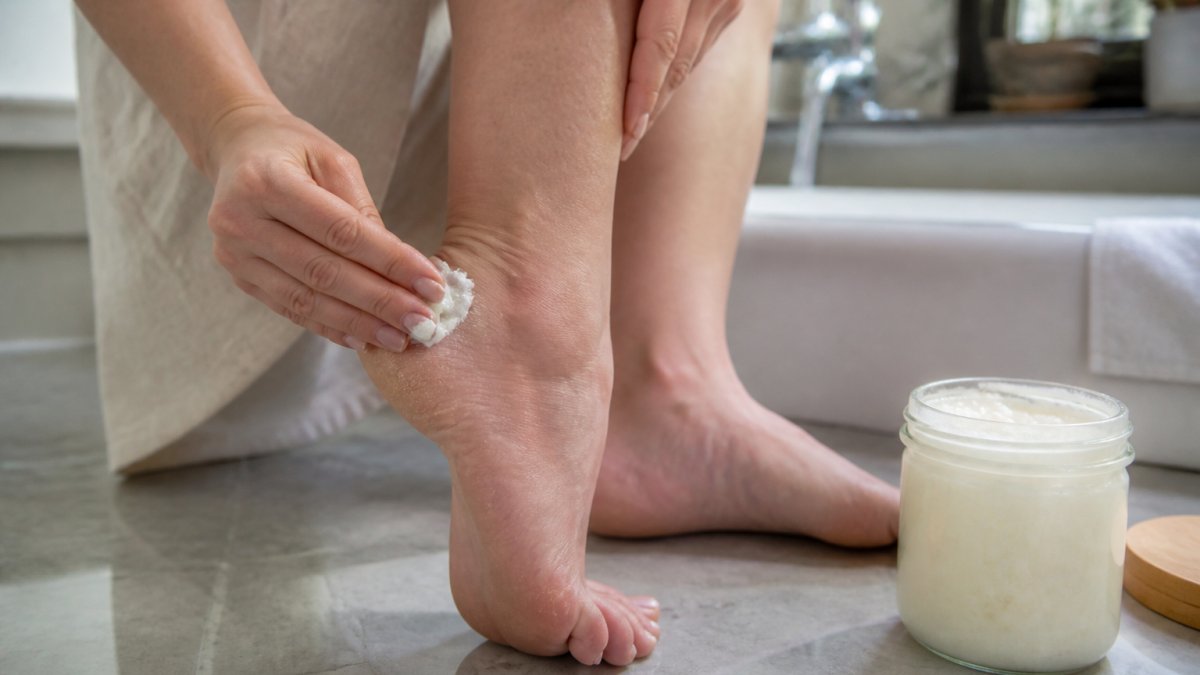
Warm a small amount between your fingers. It melts fast. Then press, don't rub, into the area.
Face: Use a pea-sized amount after cleansing. A little goes far. Too much can feel heavy on oily zones.
Hands: Apply after every wash, especially in cold months.
Heels: This is where tallow shines. Cracked heels respond well to a thick layer at night under socks.
Elbows: Same approach. Damp skin, thin layer, repeat daily.
A Simple Dry-Skin Application Routine
Follow this order for best results:
Tinted Tallow - Satin Finish Face Cream →
- Cleanse with a gentle, fragrance-free wash
- Pat dry, leaving skin slightly damp
- Warm a small amount of balm between fingertips
- Press into skin, starting with the driest areas
- Layer a second thin coat on cracked heels or elbows
- Repeat morning and night for two weeks
- Assess results and adjust the amount
Consistency beats quantity. A thin daily layer outperforms a heavy weekly one.
Tallow Skincare Risks: Irritation, Breakouts, and Patch-Testing
Tallow skincare risks are real, even for a natural product. Natural does not mean hypoallergenic. Anyone can react to anything, and a rich occlusive fat is not the right match for every skin type.
The most common issues are clogged pores, breakouts, and contact irritation. Tallow is heavy, so acne-prone skin may find it too rich for the face. Redness and itching can also show up if you're sensitive to an added botanical or essential oil.
Who should be cautious:
- People with oily or acne-prone skin
- Anyone with rosacea or seborrheic dermatitis
- Those with known allergies to bee products or specific oils
- Anyone currently using prescription retinoids or acids, since tallow can increase occlusion and irritation
A Step-by-Step Patch-Test Protocol
Most guides say "patch-test first" and stop there. Here is how to actually do it so you get useful information instead of a vague yes-or-no.
- Choose the test site. Apply a pea-sized amount to the inner forearm, near the elbow crease. This skin is thin and reactive, similar to facial skin.
- Start with a small amount. Use less than you think you need. A thin film is enough to trigger a reaction if one is going to happen.
- Leave it uncovered. Do not wrap it or apply heat. Let the skin breathe.
- Wait 24 hours. Check for redness, swelling, itching, or a rash. If nothing appears, continue.
- Reapply twice daily for 3 to 5 days. Some reactions are delayed. A single 24-hour test can miss a contact allergy that builds with repeated exposure.
- Stop immediately if you react. Wash the area with a gentle cleanser and cool water. Do not scrub.
- Wait for full resolution before testing again. If you want to isolate whether the tallow or an added botanical caused the reaction, test a plain tallow product separately after your skin has fully calmed.
Signs You Should Stop Using It
Stop use and give your skin a break if you notice:
- New or worsening redness
- Itching that starts after application
- Small bumps or whiteheads in the application area
- Dryness that gets worse instead of better
- Any swelling, warmth, or pain
If symptoms spread beyond the application site, or if you develop hives, facial swelling, or difficulty breathing, seek medical care immediately. Those are signs of a systemic allergic reaction, not a simple irritation.
When Dry Skin Needs Medical Care
Tallow is a moisturizer, not a treatment. See a dermatologist or primary care clinician if your dry skin is:
- Persistent despite consistent moisturizing for two to three weeks
- Painful, cracked, or bleeding
- Accompanied by yellow crusting, weeping, or a foul odor, which can suggest infection
- Spread across large areas of your body
- Paired with fatigue, weight change, or other systemic symptoms
These signs can point to eczema, psoriasis, thyroid issues, or another condition that needs diagnosis and targeted treatment. A balm can support the skin barrier, but it cannot replace medical care.
How Tallow Compares With Established Moisturizers
Tallow is not the only rich moisturizer, and it isn't always the best one. Here's how it stacks up against the options you already know.
| Moisturizer Type | Moisture Retention | Best For | Main Drawback |
|---|---|---|---|
| Tallow balm | High | Very dry, cracked skin | Can clog pores |
| Petrolatum | Very high | Severe dryness | Feels greasy |
| Ceramide creams | High | Barrier repair | Often pricier |
| Glycerin lotions | Medium | Daily upkeep | Fades fast |
| Plant butters | Medium-high | Body use | Less occlusive |
Petrolatum and ceramide creams have more clinical backing for barrier repair. Tallow has the better ingredient story and a texture many people prefer.
The honest take: if your skin is severely compromised, a dermatologist-formulated cream may serve you better. For everyday dryness on hands, heels, and elbows, tallow holds its own.
Choosing and Assessing a Tallow Moisturizer
Choosing a tallow moisturizer means reading labels, not marketing. A good product is simple, grass-fed, and free of fillers.
Check these five things:
- Source: Is the tallow labeled grass-fed and grass-finished?
- Ingredient count: Shorter is usually cleaner
- Preservatives: Look for none, or only natural antioxidants like vitamin E
- Texture: Whipped balms spread easier than solid blocks
- Packaging: Dark glass or airtight jars protect the fats
At Tahorah Wellness LLC, we make our tallow products in small batches with clean ingredients and no fillers.
For the face, our Tinted Tallow - Satin Finish Face Cream blends grass-fed tallow with frankincense, rosehip oil, and mango butter. It hydrates deeply and leaves a silky matte finish rather than a greasy shine.

Conclusion
Dry, cracked skin is frustrating, and finding a moisturizer that actually holds moisture can feel like trial and error.
Tahorah Wellness LLC offers small-batch tallow skincare made with grass-fed beef tallow and simple, recognizable ingredients. Our Tinted Tallow Face Cream and Luxury Body Bar both skip the fillers and additives.

Get started with Tahorah Wellness LLC and give your skin a moisturizer it can actually recognize.
Frequently Asked Questions
Is tallow skincare good for dry skin?
Beef tallow is rich in fatty acids that closely match the lipids in your skin barrier, so it can help slow moisture loss and soften rough, cracked areas. It works best as an occlusive layer applied to slightly damp skin. Results vary, and tallow skincare is not a treatment for diagnosed conditions like eczema or psoriasis, which need medical care.
How do you use beef tallow on dry skin?
Warm a pea-sized amount of tallow balm between clean fingertips and press it into damp skin after washing. Start with a thin layer on the face and a thicker layer on hands, heels, and elbows. Reapply once or twice daily, or more often on cracked skin. Patch-test on your inner forearm for 24 hours before using it on larger areas.
Can tallow clog pores or cause breakouts?
Tallow is heavier than many lotions, so it can feel occlusive on acne-prone skin. If you are prone to clogged pores, use a thin layer and avoid layering it over other heavy oils. Watch for new blemishes or redness in the first week and stop use if they appear. A patch test on the jawline can help you judge tolerance before applying it to your full face.
What ingredients should you avoid in tallow skincare?
Look for short ingredient lists built around grass-fed tallow and simple oils or butters. Skip products with synthetic preservatives, added fragrance, or chemical fillers if your skin is sensitive. Ingredients like calendula, chamomile, and helichrysum are common additions for soothing. If a label lists ingredients you cannot pronounce or recognize, that is a sign to keep looking.
Buy Organic Linen Clothing Online: 2026 Guide
Best Natural Remedies for Immune Health: A 2026 Guide
Related Posts

How to Soothe Sensitive Skin Naturally

Tallow Balm vs Commercial Face Cream: Which Suits Your Skin?

How to Prevent Wrinkles in Linen Clothing

Best Natural Remedies for Immune Health: A 2026 Guide
